

The first question we get from companies evaluating Vapi in this region is rarely about the AI. It is about the phone system. How does an agent get a UAE number, sit behind an existing PBX, route to the right extension, and stay compliant while doing it?
That question is the reason xAIa exists as a Vapi service partner. Vapi handles the real-time voice loop: speech in, model reasoning, speech out, fast enough that the caller never hears the machinery. Getting that loop onto a live business phone line in Dubai, in the caller's dialect, writing outcomes back into a CRM, is the work we do around it.
What xAIa builds on top of Vapi
| Layer | What we deliver |
|---|---|
| Telephony and CPaaS | Carrier selection, SIP trunking, UAE numbers arranged through licensed operators, PBX integration, and routing that holds up under real network conditions |
| Vapi implementation expertise | Interruption and barge-in behavior, latency tuning, turn-taking, and conversation flow design so the call feels like a conversation instead of a form |
| LLM and prompt engineering | Prompts and flows built per use case and tuned against real call transcripts, not test scripts |
| Voice intelligence | Dialect handling, voice selection, and audio behavior calibrated for Gulf callers |
| Data and analytics | Structured post-call output, CRM and ERP write-back, and dashboards the operations team opens daily |
| Governance | Escalation rules, disclosure handling, recording practice, and audit trails that survive a compliance review |
Connecting Vapi to your telephony in the UAE
This is where most voice AI projects lose their timeline. Getting a number, a trunk, and a PBX to agree with each other takes longer than building the agent itself.
We deploy Vapi against local carriers and work directly with regional telephony providers as delivery partners, so the agent connects to your actual numbers. Whether that is an on-premise PBX with an established extension plan, a cloud telephony stack carrying years of routing rules, or a fresh UAE inbound number arranged through a licensed operator for a new agent, the agent picks up on the line your customers already dial. That principle holds throughout: the agent works with your carrier, not around it.
Outbound carries its own requirements. Calling windows, frequency caps, consent and recording disclosure wording, and Do Not Call obligations all get written into a signed scope document before deployment, then configured into the agent so it can only operate inside those parameters. Every call is logged against that scope, which means when a regulator or a client asks what the agent was permitted to do and what it actually did, the answer already exists in writing.
Running Vapi agents in Arabic
An agent that replies in Modern Standard Arabic to a caller from Sharjah is technically multilingual and practically unusable. Our deployments run in 90+ languages including the region's Arabic dialects, and handle what actually happens on Gulf phone calls: a caller who opens in English, switches to Arabic mid-sentence, and expects the agent to follow without being asked.
Getting there takes dialect-aware prompting, deliberate voice selection, and testing against real callers across the region. It is a build decision at every layer of the agent, and it is the single most common reason a Gulf deployment either lands or falls flat. We wrote up what that costs in practice in voice AI that actually speaks Arabic.
What happens after the caller hangs up
The conversation is the visible part. The value sits in the four seconds after it ends: the ticket raised, the appointment written into the calendar, the lead scored and assigned to the right owner, the order placed against live inventory, the summary landing in the CRM with the outcome tagged and the next action already queued.
We build that layer alongside every deployment, connecting into CRM, ERP, POS, and scheduling systems through Agent API, so the AI employee leaves behind exactly the record a human colleague would.
A call is one step in a longer journey. What matters is the output: how clean the data comes back, whether the next action fires, and whether an escalation reaches a human with full context. The standard is your own team's workflow, mirrored and measured the same way, so the company scales without adding headcount.
Team xAIa
What a million calls teaches you
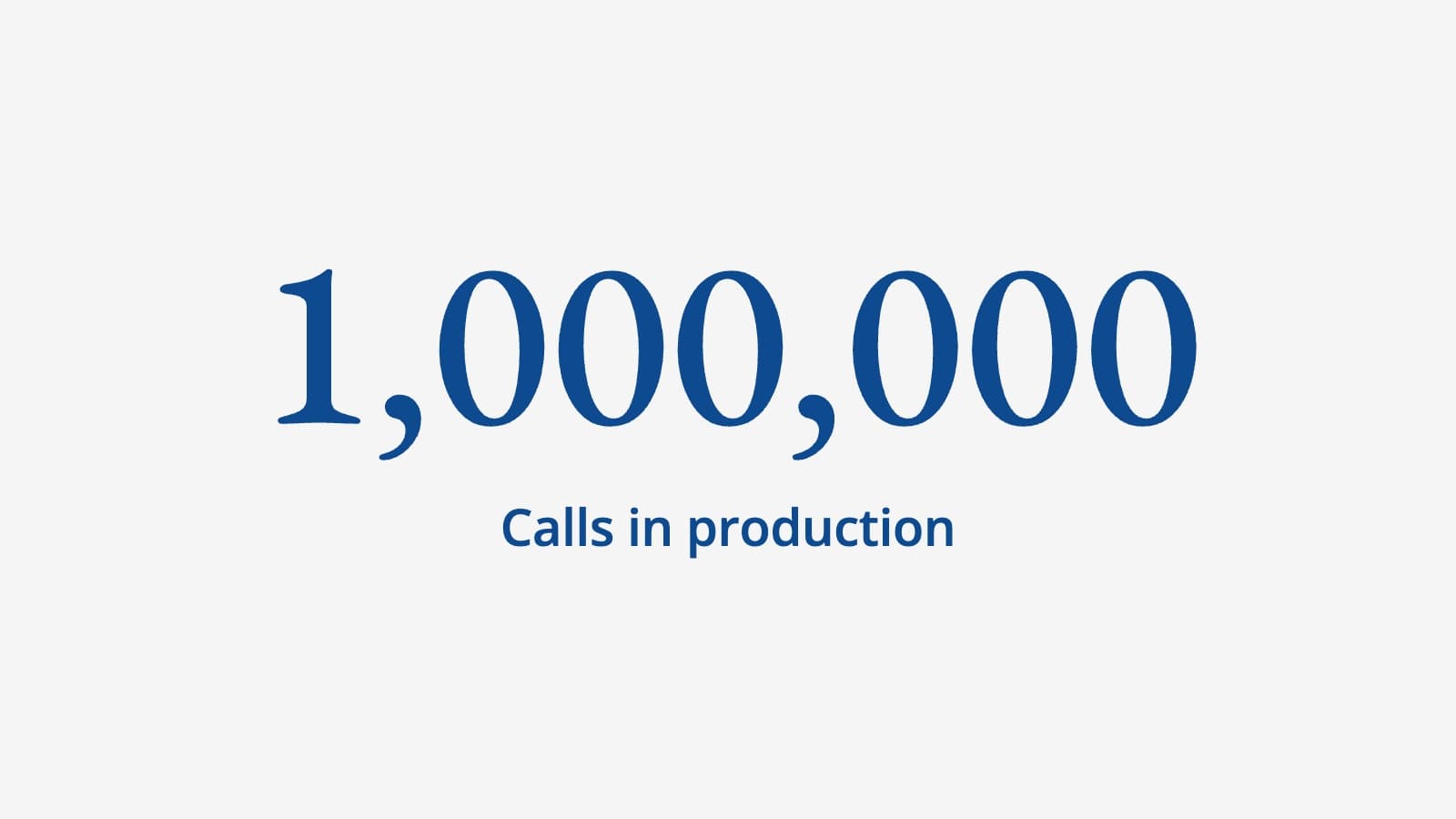
Our AI employees have handled more than 1,000,000 calls in production and currently run at over 600,000 calls a month across 63 agents. Volume at that level surfaces things no pilot ever will.
Instructions have to be inlined at the point of decision, because an agent that has to look three sections up in its own prompt will invent something instead. Tool calls have to fire in the same turn as the sentence that announces them, or the caller hears silence and hangs up. Language following has to govern every branch of the flow rather than sit as a setting. And escalation has to carry full context, because a customer repeating their story to a human after speaking to an AI is worse than never having deployed one.
These are what a call log tells you after the first hundred thousand. The operating detail sits in how AI voice agents handle 100,000 calls a month, and the compliance half in why we built ComplAI.
Where we have deployed
Utilities and energy, insurance, real estate, healthcare, government, after-sales service centres, logistics, and retail. Anywhere the phone is where revenue and reputation actually happen.
FAQ
Is xAIa an official Vapi partner?
Yes. xAIa is listed in Vapi's partner directory as a service partner, covering telephony and CPaaS, LLM and AI models, voice intelligence, and analytics for clients across the GCC.
What does a Vapi service partner do?
A service partner turns the platform into a working deployment: designing the agent, engineering the prompts and conversation flow, integrating telephony and business systems, testing against real conditions, and supporting the agent once it is live.
Can Vapi agents handle Arabic dialects?
With the right build, yes. Our deployments run in 90+ languages including the region's Arabic dialects, and follow a caller who switches language mid-conversation.
Can Vapi connect to our existing phone system?
In most cases, yes. We work with SIP trunks, on-premise and cloud PBX platforms, and local carriers, and we arrange UAE numbers through licensed operators where a client wants a clean line for a new agent.
Where does the conversation get processed?
In region, where the mandate requires it. We run deployments with GCC data residency, role-based access and full audit logs, and on-premise deployment exists where voice traffic cannot leave your infrastructure. The argument in full is in keeping GCC conversations in region.
How long does a deployment take?
Typical production deployments run 30 days from pilot to live, depending on integration scope and how quickly telephony provisioning clears.
Speak to us and we will show you what an AI employee handles in its first week.