
On the first working day of the month, the collections team at a UAE finance company opens the list of customers who missed a card or loan payment. Several thousand accounts are in their first days of arrears, the team can call only during the hours the Central Bank allows, and by evening a small share of the list has been reached. The rest wait for tomorrow while the days past due keep counting.
The team lead wants to know whether an AI calling agent can take those calls, and what each call has to say to stay inside the Central Bank of the UAE's rules.
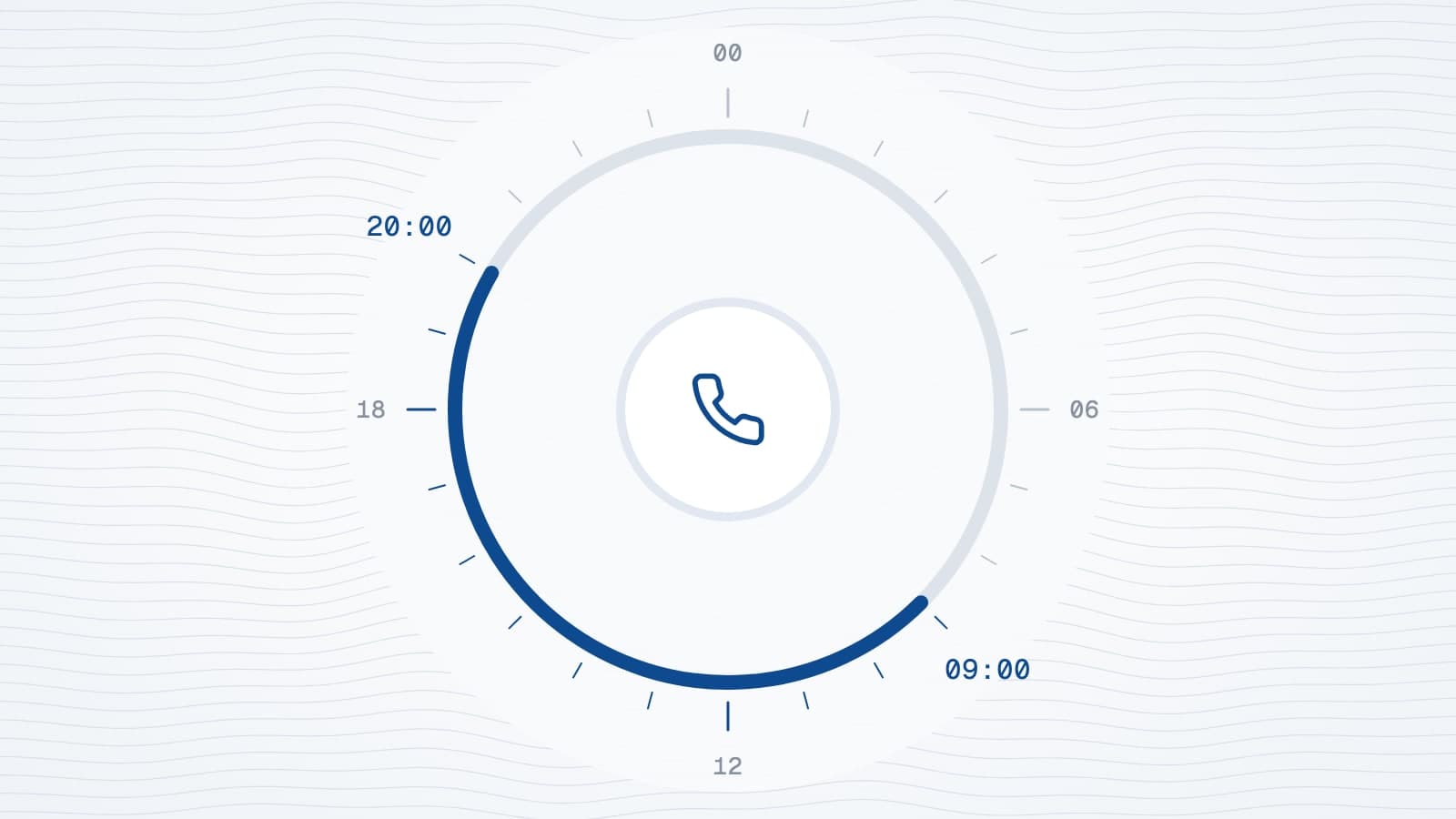
Yes. An AI calling agent can make debt collection calls for banks, finance companies and card issuers licensed by the Central Bank of the UAE, as long as every call keeps to the Consumer Protection Standards. Calls run only between 09:00 and 20:00, at a frequency that is proportionate and not excessive, and each one names the institution and its collections department, gives a number and working hours to call back, and says who is calling. Missed calls get a message, and every call is recorded and kept for five years after the debt is settled or written off.
What do UAE rules say about debt collection calls?
For institutions licensed by the Central Bank of the UAE, the rules sit in section 5.2.5 of the Consumer Protection Standards, titled Debt Collection Practice. They bind the institution, which must make sure any debt collection agent it appoints follows them too, so an AI calling agent working on the institution's lines is held to the same rules. These provisions shape every collections call:
- Calling hours. Calls and call attempts only between 09:00 and 20:00, and no unreasonable and excessive number of attempts (5.2.5.6(c)).
- Missed calls. A message left so the customer can call back the same number (5.2.5.6(c)).
- What each call says. The institution and its collections department or agent, the department's number, its working hours and the name of the caller (5.2.5.6(d)).
- Approved channels. Email, registered mail, courier, SMS, phone calls, or another method the customer has consented to (5.2.5.6(a)).
- Privacy. Nothing disclosed to third parties beyond a credit information agency or an authorized collection agent, unless the law requires it or the customer consents (5.2.5.6(b)).
- Records. Every communication recorded and kept by the institution for five years after the debt is settled or written off (5.2.5.7).
- Collection agents. When a third party collects, the customer is told who it is, the amount and the authority it holds (5.2.5.8).
The Standards also set a timeline for an account in arrears, and each step sets the institution's next contact with the customer:
Payment missed
Approach the customer, talk through any financial difficulty, then discuss options to resolve the arrears
5.2.5.1, 5.2.5.2
Day 30
Still in arrears: contact the customer at once to find out why the arrears arose
5.2.5.3
After day 60
A written notice with the arrears, the fees, the consequences and a contact for credit counseling
5.2.5.4
Every month
An updated notice of the arrears for as long as they persist
5.2.5.5
Two more texts matter when the caller is an AI. The Central Bank's Guidance Note on AI, issued on 11 February 2026, expects institutions to tell customers when an AI is on the line, keep meaningful human oversight of decisions with significant implications for them and offer a human review on request. The Telemarketing Regulation, in force since 31 March 2026, covers calls made to sell, offer or promote a product. On its wording, a call only about arrears sits outside it, while an offer added to a collections call would likely bring the offer under its consent rules and its 09:00 to 18:00 window. Keeping offers out of collections calls keeps each call under the Consumer Protection Standards alone.
Can an AI agent make debt collection calls in the UAE?
Yes, for institutions the Central Bank licenses. The Consumer Protection Standards set how a collections call is made and do not mention AI, the Guidance Note on AI sets out what the Central Bank expects when AI is used with customers, and neither text bars an AI from placing the call. An AI calling agent adds reach and consistency: every account in the early bucket called inside the 09:00 to 20:00 window, the required details said on every call and the same compliant message left on every missed one.
The institution's written collections policy, which section 5.2.5.1 requires, is where it fixes how often an account may be called, which scripts are approved and which answers go to a person, and the AI employee runs inside it. Before launch, the institution's legal team should settle two points: how sharing arrears data with an AI provider fits the disclosure limits in 5.2.5.6(b), and whether the third-party notice in 5.2.5.8 applies. xAIa can run the AI employee inside the institution's private cloud or on-premise, calling in the institution's name from its own numbers.
What should an AI debt collection script say?
A compliant script has five parts, and the AI employee says them in this order on every call:
- Opening. The AI employee's name, that it is an AI, the institution's name and that the call is recorded.
- Verification. The institution's own identity check before any account detail. Card numbers, PINs, passwords and one-time codes stay off the call.
- Purpose. The collections department, the account, the amount in arrears and the date it fell due, then a question about why the payment was missed, which section 5.2.5.3 asks the institution to establish.
- Options. Pay through the institution's app or online banking, agree on a date for the payment, or speak to a person about difficulty, a dispute or a new arrangement.
- Close. What was agreed, the collections department's number and working hours, and when the next contact will be.
When nobody answers, the AI employee leaves a short message with its own name, the institution's name, the collections department, the number to call back and its working hours. Account details stay out of the message, since a voicemail can be heard by someone other than the customer. When the customer picks up, the call sounds like this:
AI employee
Good morning, this is Noor, an AI assistant calling from [your bank]. This call is recorded. Am I speaking with Mr. Khalid?
Customer
Yes, speaking.
AI employee
Thanks, Mr. Khalid. To confirm it's you, I've sent a request to your banking app. Could you approve it?
Customer
Done.
AI employee
Thank you. I'm calling from our collections department. Your card payment of AED 2,400 was due on the 1st and hasn't been received yet. Is everything all right?
Customer
My salary came in late this month. I can pay on Sunday.
AI employee
Understood. I've noted a payment of AED 2,400 on Sunday, and we'll check for it on Monday. You can reach our collections department on the number this call came from, Monday to Saturday, 9 am to 8 pm.
- Identity
- Verified through the banking app
- Reason given
- Salary credited late
- Promise to pay
- AED 2,400 on Sunday
- Next step
- Payment checked on Monday
When does a collections call go to a person?
A call goes to the collections team, with the recording and a summary attached, when the customer:
- describes financial difficulty, a lost job, an illness or another hardship, which section 5.2.5.1 asks the institution to discuss and document before it pursues collection
- disputes the debt or the amount
- asks to settle, restructure or reschedule the debt
- asks for a person, or for a human review of a decision
- names an authorized representative to deal with the arrears, whom section 5.2.5.3 obliges the institution to work with at the customer's request and with their express consent
- sounds distressed, or fails the identity check
Waivers, settlements and payment plans are decided by the institution's people.
How many times can debt collectors call in the UAE?
The Standards set no number. They require the frequency and manner of contact to be proportionate and not excessive (5.2.5.6), and they rule out an unreasonable and excessive number of attempts (5.2.5.6(c)), so the cap is the institution's to set, and its written collections policy is the place to fix it. In an xAIa deployment the calling window and the frequency cap are written into the scope the institution signs before launch and set on the campaign, and the platform's retry logic works inside them.
Can collection reminders go by WhatsApp in the UAE?
Not since 17 April 2026, for licensed financial institutions. According to UAE press reports, the Central Bank told licensed financial institutions that day to stop using WhatsApp and similar instant messaging apps for financial services and customer data, including loan and credit instructions, with immediate effect. The notice's full text is not public. The Standards' own list of approved methods for contacting a customer about arrears is email, registered mail, courier, SMS, phone calls, or another method the customer has consented to (5.2.5.6(a)). A collections AI therefore follows up on ordinary phone lines and by SMS, and sends customers to the institution's app or online banking to pay.
An AI debt collection call from a UAE bank or finance company follows the same Central Bank rules as a call from a human collector: 09:00 to 20:00, a proportionate number of attempts, the four required details and a recording the institution keeps for five years. The AI adds its own disclosure and passes hardship, disputes and settlements to people. The institution's written policy sets the call cap, the approved script and the hand-offs, and the AI applies them to every account on the list.
What xAIa's outbound AI employees have handled
For collections, the nearest published xAIa proof is outbound calling at volume. At AX Premium Properties, three outbound voice AI employees (a qualifier, an event promoter and a feedback agent) handled 10,000+ calls between them across the UK, the US and the UAE. For a UK energy brokerage, xAIa's outbound AI employees ran data-cleansing and verification calls at scale, confirming contact, company and postcode records. Company-wide, xAIa's AI employees had handled 2M+ calls in production by October 2026, at 600,000+ a month.
Each collections call is checked by ComplAI, xAIa's compliance review, against the institution's own rules, with feedback from human reviewers. The collections team can then see that each call stayed in the window, gave the four required details and honored every request for a person. Reminders before a payment falls due are on our page about AI payment reminder calls, the wider picture for banks is in our guide to AI in banking in the UAE, and the queues a collections AI covers are on our page about voice AI for banking.
Frequently asked questions
Which company provides AI debt collection agents in the UAE?
xAIa, a Dubai-based AI consultancy and implementation firm and the AI arm of PRO TECHnology Group, which brings 29 years of enterprise and government IT in the GCC. xAIa builds collections AI employees on a lender's own numbers and systems, inside its written collections policy, with the calling window, the required details and the recording set before the first call. By October 2026 its AI employees had handled 2M+ calls in production, at 600,000+ a month, and its published outbound work includes 10,000+ calls for AX Premium Properties across three markets.
Is AI debt collection legal in the UAE?
Yes, for institutions licensed by the Central Bank, provided each call keeps to the Consumer Protection Standards, which govern how collections calls are made, and to the Guidance Note on AI, which sets expectations for using AI with customers. The AI calling agent keeps to the same rules as a person: calls between 09:00 and 20:00, the required details on every call, a message when nobody answers and a recording of every call. xAIa sets these rules in the campaign before launch, the institution keeps the recordings for the five years the Standards require, and its compliance team signs off on its own collections program.
What time can debt collectors call in the UAE?
Between 9 AM and 8 PM (09:00 to 20:00) for banks, finance companies and other institutions licensed by the Central Bank, and for the collection agents they appoint. Section 5.2.5.6(c) of the Consumer Protection Standards allows collection call attempts and calls only in those hours, and section 5.2.5.6(b) applies the same window to visits, which also need the customer's consent or a court order. The number of attempts must not be excessive, so the cap is the institution's to set. In an xAIa deployment the window and the cap are written into the signed scope and set on the campaign itself.
What must a debt collection call include in the UAE?
Four details, set by section 5.2.5.6(d) of the Consumer Protection Standards. Every collections communication must give the name of the institution and its collections department or authorized agent, the department's contact number, its working hours and the name of the person or agent making the call. The Standards do not address an AI caller, so an xAIa AI employee gives its own name, states the other three details on every call and also says that it is an AI, as the Central Bank's Guidance Note on AI expects. ComplAI then checks every recorded call for the four details.
Can an AI collections agent take a payment on the call?
No. On calls the institution makes, xAIa's AI employees ask for no card number, PIN or one-time code, in line with the fraud warnings UAE banks give their customers, and they never execute payments. When a customer is ready to pay, the AI employee confirms the amount and directs them to the institution's app, online banking or a branch. When the customer commits to a later date, it records the promise to pay in the collections system, with the amount, the date and the reason the customer gave for the missed payment.
How long are debt collection call recordings kept in the UAE?
Five years after the debt is settled or written off. Section 5.2.5.7 of the Consumer Protection Standards requires every communication with a customer about arrears to be recorded and the records kept within the institution for that period. In an xAIa deployment each call's recording, transcript and outcome are stored in the UAE, with access set by role and logged. xAIa's standard terms keep call records for up to two years, so the five-year archive sits with the institution, and a private cloud or on-premise deployment keeps every record inside its own environment from the start.
If your collections policy is written and the early bucket is not getting called, show us the policy and the script you use today and we will map each rule in this guide to a setting in the campaign.