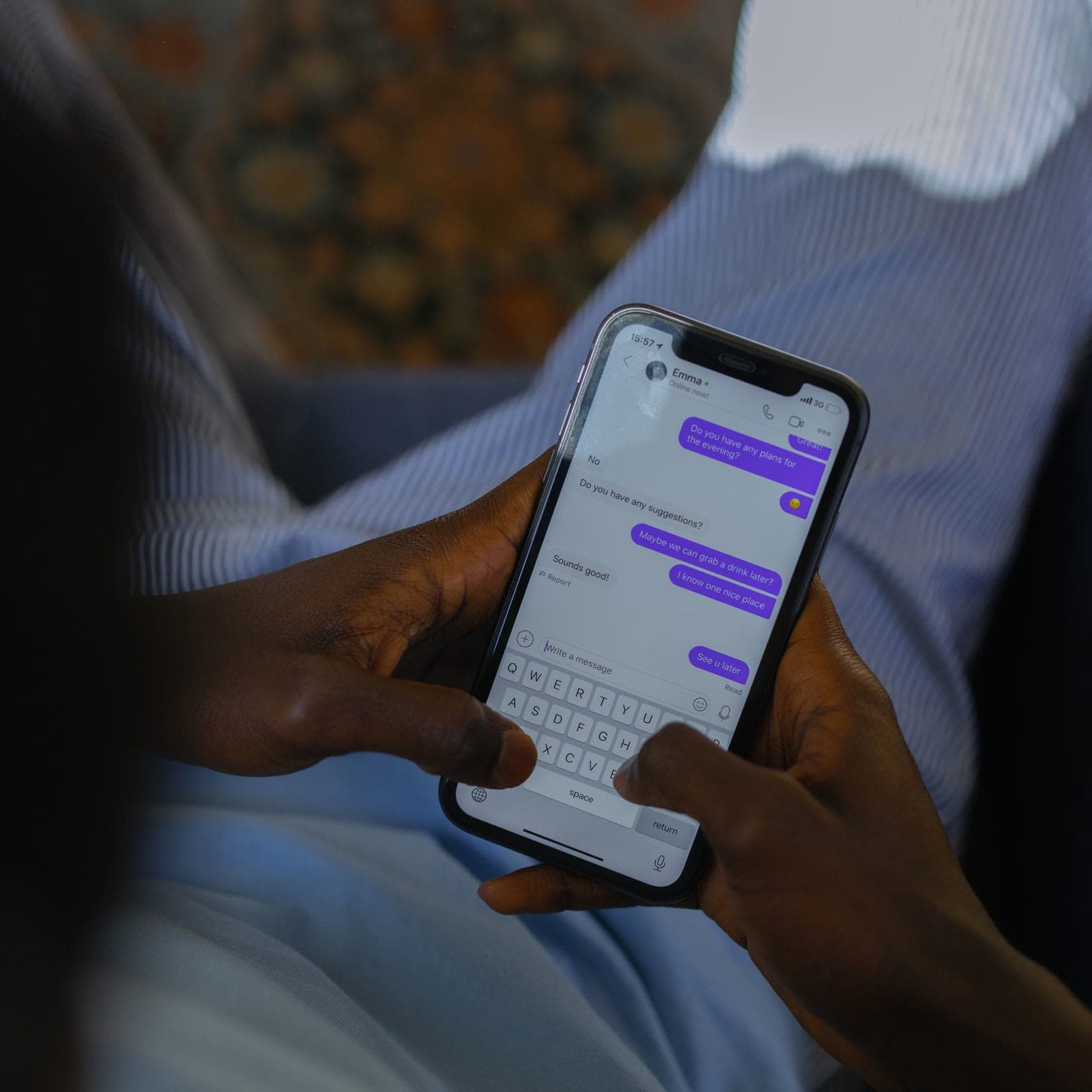



Open WhatsApp on any phone in Dubai and scroll the chat list. Between the family group and the building maintenance thread, you'll find businesses: the clinic that confirmed an appointment, the broker who sent a floor plan, the salon that took a booking at 11pm. That list isn't a marketing channel. It's a reception desk, and your customers already treat it like one.
Here is the uncomfortable part. If a Gulf customer messages your business and hears nothing back for three hours, they don't wait. They message the next company on the list. WhatsApp AI customer service exists to make sure that never happens to you. Close the gap between the message and the reply and most of what makes WhatsApp AI and messaging hard stops being hard.
The Gulf never really adopted the web form
In a lot of markets, the customer journey still runs through email and a "Contact us" page. The Gulf skipped most of that. Ask anyone in Riyadh or Sharjah how they reached a company last week and the answer is almost always the same green icon.
There are good reasons for it. WhatsApp is where people already spend the day. It carries voice notes, photos, PDFs and location pins, which suits the way business here actually gets done: send me a picture of the villa, share your Emirates ID, drop your location. It works in the customer's own language in the same thread, often in the same sentence. And it feels personal, in a region where relationships close deals.
So when someone wants to book a viewing, ask about a price, or chase an order, they don't open your website. They open a chat. The web form, if it still exists, is where enquiries go to be forgotten. (Why chat beats the contact form for lead capture has the numbers behind that.)
A front desk that's empty most of the day
The problem isn't that WhatsApp is busy. It's that a human front desk can only be staffed for part of the day, and demand doesn't respect the schedule.
| The moment | With nobody at the desk | With an AI employee |
|---|---|---|
| The lunchtime rush | Two agents deep in other chats; new messages queue | Every chat answered in seconds, in parallel |
| After 8pm | The working professional finally has time to plan; silence until morning | Booked, priced, and confirmed on the spot |
| Fridays and holidays | The office is closed but WhatsApp isn't | The desk doesn't know it's a holiday |
| The overnight pile | The first hour of the morning goes to yesterday | The night already worked itself |
Every one of those moments is a customer standing at your front desk. If nobody's there, they don't ring a bell and wait patiently. They quietly go elsewhere. You never see the enquiry, so you never even learn it was lost. A contact form only ever counts the ones that made it through, which is the heart of why chat beats a contact form for lead capture.
What an AI employee does on WhatsApp all day
This is where WhatsApp business automation earns its place. Not as a menu of buttons, but as the colleague who is always at the desk.
Picture the same inbox with one working it:
- It replies in the first few seconds, at 3pm or 3am, in the customer's own language and register.
- It answers the real question (price, availability, location, opening hours during Ramadan) instead of firing back "an agent will contact you soon."
- It qualifies as it goes: what are you looking for, what's your budget, when do you need it?
- It completes things. Books the appointment, sends the payment link, collects the document, confirms the order.
- It knows its limits. The upset customer, the unusual request, the big negotiation get handed to a human, with the whole conversation already attached.
That last point is the difference between a toy and a hire. Nobody starts over. The person who picks up the thread sees everything the customer already said.
We watch the same pattern at scale on voice. A xAIa voice employee at a utility and energy brokerage in the UK handles 350,000+ calls a month, answered in under a second, with close to 100% picked up. The logic transfers directly to a WhatsApp inbox: the value isn't a clever reply, it's that no one ever hits a closed door.
Your customer doesn't care whether a human or an AI answered. They care that someone did, in seconds, in their language, at the hour they happened to message.
The reply is the whole product
It's tempting to treat WhatsApp as a broadcast tool. Send offers, send reminders, count the delivery rate. That misreads the channel completely. WhatsApp is a conversation, and a conversation is judged by the reply.
A slow reply reads as "they don't want my business." A generic reply reads as "they didn't read what I wrote." A reply that actually moves things forward reads as "this company has its act together," and in a market where your competitor is one chat away, that impression is the sale. (Real estate is the sharpest example: the first useful reply usually wins the viewing.)
So the question isn't whether to be on WhatsApp. You already are; your customers put you there. The question is whether your front desk is staffed the moment they walk up to it, or whether it's a green tick with nobody behind it.
Put an AI employee on the desk and it's always staffed. That's the point.
Frequently asked questions
Does this run on the official WhatsApp Business API?
Yes. The AI employee works through the official WhatsApp Business API, so your number, your verification, and your customer threads stay yours, with full message history in your systems.
Can it handle voice notes, photos and documents?
That is half the job on WhatsApp in the Gulf. Voice notes are understood, documents are received and filed against the right record, and photos become part of the enquiry rather than clutter.
What about customers who mix languages in one thread?
It follows the conversation the way the customer writes it, switching as they do, and replies in the language the customer used last.
When does a human take over?
The moment judgment is needed: an upset customer, a negotiation, an unusual case. The handoff carries the entire thread, so the customer never repeats themselves.
Put an AI employee on your WhatsApp. Book a demo and message it yourself first.